At WordPress VIP, we’ve worked closely with journalists since the very beginning of our service. From our earliest clients, news organizations were an integral part of WordPress’s growth from an open-source blogging platform to a technology that now powers more than 32% of all sites on the web.
Since that time, VIP has grown into an enterprise publishing platform that now boasts a customer list including some of the biggest news organizations in the world — CBS, Time.com, and News Corp., to name a few — to global brands like Microsoft, Airbnb, Capgemini, and Capital One.
But in this difficult business climate for news organizations, we want to double down on our commitment to journalism and a free (and sustainable) press. Today VIP is announcing that it has made a significant investment in The News Project, a new WordPress-based platform founded by Merrill Brown, the veteran digital news executive who helped launch MSNBC.com.
In addition to VIP’s financial investment, The News Project will be powered by VIP’s platform, with a goal of serving medium-sized digital news organizations around the world. You can read more about TNP’s vision here.
Along with VIP’s existing platform for large publishers and brands, Automattic’s funding of the new Newspack initiative with Google and other partners (announced yesterday), our own in-house media properties Longreads and The Atavist (bringing the best narrative storytelling to WordPress), and even the individual work of reporters like 12-year-old Hilde Lysiak, we are deeply committed to the sustainability of news organizations, large and small, around the world.
We’re thrilled to work with Merrill and his team on this shared vision. For more information, go to thenewsproject.net.
Peek behind the scenes with the WordPress team at News Corp Australia
We have had the pleasure of working with News Corp Australia (NCA) since early 2015. Today they host 21 sites with us, including market leaders News.com.au, Foxsports.com.au, and TheAustralian.com.au.
For NCA, WordPress represents one important application among others, within a complex and powerful systems architecture that predated their migration. They run their own massive content database and API (CAPI) and also use Méthode for print publishing. The smart ways they have integrated their existing components into WordPress as they migrated their flagship publications to it are a testament to their development vision and execution. They also point to one of WordPress’ great strengths. Its flexibility allows enterprise organizations with existing infrastructure to adapt and evolve with WordPress over time, rather than requiring a complete systems overhaul and mass migration all at once.
The SPP team at News Corp Australia
Kurator Lite is one of those powerful custom-built tools that NCA uses to bring external resources to authors and editors working in WordPress. After catching a glimpse of Kurator Lite in action, I chatted with Juan Zapata, head of the WordPress group, the Site Production Platform (SPP) team at News Corp Australia, to hear more about its history, how it works, and what’s in the pipeline for the SPP team.
You shared a really cool video that shows how an author or editor in WordPress at News Corp Australia can use Kurator Lite to work with all these different assets and content from all over the company. It looks like a really impressive piece of workflow. Tell me about its history.
Juan Zapata: Before we moved on to WordPress VIP we had two different platforms running. One was called FatWire, which was Oracle-based, for print and digital. The other one is Méthode, for print editions of newspapers. There was a disconnect between digital and print in which a user had to create the categories in both systems to be able to have them running correctly. This gap drove the company to create something to bridge the two.
That’s where the need for Kurator came about, a tool that manages whole sections of content in both. It’s a tool to help editorial tell the story a bit more easily and share it within these 2 worlds. After Kurator the team built Kurator Lite, which is that small panel you see in the video. That allows you to see the sections or the categories that you can assign to multiple stories. Then they embedded that thing into FatWire. And the same functionality was embedded into Méthode.
What year was that?
I started at News Corp Australia in 2015, and I think that project started in 2013.
How many publications and asset sources does Kurator search?
Kurator is basically an interface on our database, which is called CAPI, for Content API. At this stage, it has six million stories, last time I heard, like a month ago. The stories are syndicated across multiple sites, so it is basically a massive search on our database.
Really massive. So there was Kurator and you had versions of it implemented in these two CMS systems, FatWire and Méthode. Tell me about the WordPress implementation.
We decided, ‘okay, editors already know how to use this tool. Editors already are familiar with these interfaces. Let’s also embed it into WordPress, where they are managing digital publications.’ That’s the video that you saw in which you can basically find stories, search by section, drag and drop those assets from an external database, which is not within WordPress. Then WordPress will grab them and import them to be displayed and curated.
How recently was that embed for WordPress made available? When did the team finish that?
That needed to be done ASAP as we implemented WordPress…It went live at the end of 2015, so it had to be ready by that time because they need to be able to manage stories or curate stories within WordPress. They need to be able to search the stories that are not in WordPress to be able to import them and organize them and display that within the WordPress template. That had to go straight out.
The News Corp Australia Content API has over 6 million stories
How does it work? Can you walk me through some of the ways that an editor or an author would use it as they’re creating a story?
We tried to keep it as simple as possible. There are two ways of interacting with this thing. One of them is to rank or put collections into WordPress. Within WordPress, we created a custom post type that is a collection of items, of stories, of promos or whatever you want in there. It’s a collection of posts, basically.
You can go and open an interface for Kurator in your right panel. Then you search for whatever story you want. You drag it and drop it. You drop it into your container of the collection in that case. Then you can rank your collection in any place or your story in any part of the collection. It can be in the first location of that collection.
Then that collection is rendered in the website, for example, in the front page. It will be like the main stories in there. They can drop main stories in there directly, so they manage that concept of collections in there for that one. One way of doing it is through ranking stories into collections. You can open your Kurator panel, drag and drop, and pull your story directly in there.
The other way authors use Kurator Lite is, when you’re creating a story, basically you have your WordPress story in there. You create your title, your body. Within News Corp, we have the concept of containers. Container One is…if I translate that into WordPress, that will be your thumbnail image or your picture image. When you open the article page at the top you’ll see your featured image.
We have extended that functionality a little bit. What you can drop in there is multiple images and even videos. To keep it simple you just open your Kurator window on the right side, and then search for the image and then drop it into Container One. We have also extended this capability to the body of the article using this as oEmbeds elements.
Finally, we have something that is called Container Two right at the bottom, which is a container for related articles, things that you may be interested in that are related to these articles that you’re creating. The same functionality works there. You drag and drop and put it into that container. We tried to keep it as easy as possible as it helps to manually curate content.
The drag and drop looks really nice in the video. How does that work?
It took us a while to develop because the Kurator panel is an iframe. What we have to do is behind the scenes when you click on a drag event, it extends or puts a div that extends across the whole visible area of your editor. When you drag out of your iframe (visually as you are still within it), it starts sending post messages to that parent window, telling it, “Look, I’m in this position of that massive element.” Then it will be able to identify what to highlight behind the scenes.
Because there was no easy way of offering drag and dropping functionality between two iframes, we came with this approach. It’s all done through post messages going back and forth. Once you drop it, it sends another post message saying, “I drop it in this location.” Then we’ll add it and trigger the whole thing that is happening there.
It’s not the best implementation today because nowadays there are various different tools available that we can implement it with. There is now a way that we have figured out of integrating directly into WordPress, instead of using an iframe, but we tried to keep it as close as possible as it was implemented in the previous system because it was a known interaction and a business requirement. We knew what we were going to do in there at the time, basically, instead of going and trying different stuff with WordPress. But now we know a way of integrating more directly with WordPress, which will come later on.
What else does the full Kurator application do? What features are you most proud of?
Kurator does section management. If we translate that into WordPress terms, that will be category management. You can create categories in there. It does very good as it displays syndication rules in a very natural way. Kurator does not syndicate per se, but it has the rules of syndication. You can create a section within Kurator, and that section will say, “Okay, when somebody selects this specific section, I have to put it in this website in this category, in this other website in this category, in this website in this category.” It will tell CAPI, “You have to publish this information into all these sites.”
That’s one of the fantastic features that Kurator has in there, section management and syndication management.
The other one, of course, is Kurator Lite, which is for searching assets. That’s the part that’s integrated into WordPress.
The other one is legal kill. The whole concept of legally killing an asset is to remove it from any website as soon as possible for legal reasons. You say, “I want to legal kill this item,” but the problem is that the asset has been syndicated to multiple sites. You cannot say, “Yeah, it’s deleted from all the sites,” until you get confirmation from all the sites. To accomplish this Kurator verifies all the sites that it has been syndicated to and starts pulling information from there to see if everything was successful depending on the information that it has. It stays there until it finishes. If there is an error, it will notify people about it. It’s a very robust platform built in Node.js with AngularJS. It’s very interesting. It’s completely separate to WordPress, completely separate to CAPI. It’s its own beast.
How much of a team supports Kurator?
It’s three people. It’s a very small team. It was built long ago, and the core of it hasn’t needed to be touched since then. They built it as a plugin system – one plugin is search. Another plugin is the legal kill functionality. Another plugin is the section management piece. That core thing, they haven’t touched it since they built it. That’s how well they built it. It was a very good engineering task that they did in there for that one. Yeah. At this stage, it’s three people maintaining it.
Tell me about the SPP team, what does your team do and how do you work?
Within the company, we are the core team that powers WordPress and the teams that all the other product teams developed. We are responsible for ingesting content from our content API, CAPI into WordPress, getting that synced correctly in WordPress, Developing and maintaining our own editor and supporting theme developers with extra plugins within other functions of the team.
We are 4 WordPress PHP developers, 2 testers, and 1 automation tester, who is also a developer.
We actually have 52 different plugins that allow us to do a lot of stuff in our system within WordPress. To name some we have CAPI sync which controls the translation and ingestion of content to WordPress, Authoring which allows editors to create content within WordPress with all the different containers and integrations, Kurator integration, CHP integration which is our archive of images not hosted within WordPress, Legal Kill, Draft Post, Expire Post, Site Migration, I can go on…The list is massive.
What’s coming up on the SPP roadmap?
One big one is, we removed the previous liveblogging functionality that we were using, which was with a third party. We are bringing it into WordPress using VIP’s Liveblog plugin. We have been rolling that out this last month. Now we’re rolling out AMP support for live blogging which I’m really keen and looking forward to getting it out. Also, we are working on migrating to VIP Go to which our plugins need a bit of massaging but nothing that worries me.
That’s great. What kinds of use cases around News Corp is live blogging used for mostly? Is it sports? Is it entertainment?
Almost everything. Sports is the main one that you will see in there, but they have rolling stories around every morning that says, “Things that you need to know today.” Think of it like a live coverage story. They’re just churning stories in there into the Liveblog, and that appears in your homepage saying, “Things that you need to know today. This happened, or this happened yesterday.” They change that every 10 minutes, every 15 minutes. It’s like a live blogging functionality, but they use it in that part of the site. That’s used every day.
Political applications as well, they use it. Catastrophic events, like fires. Anything that needs a live blog, but basically the two main ones are sports, and then daily things that are happening in the city.
To learn more about our work with News Corp Australia, check out this case study.
Last week saw the release of WordPress 5.0, the project’s first major update in a little over a year. It’s most notable for the addition of the new Gutenberg editor component, which introduces blocks as the new mental model for WordPress content management.
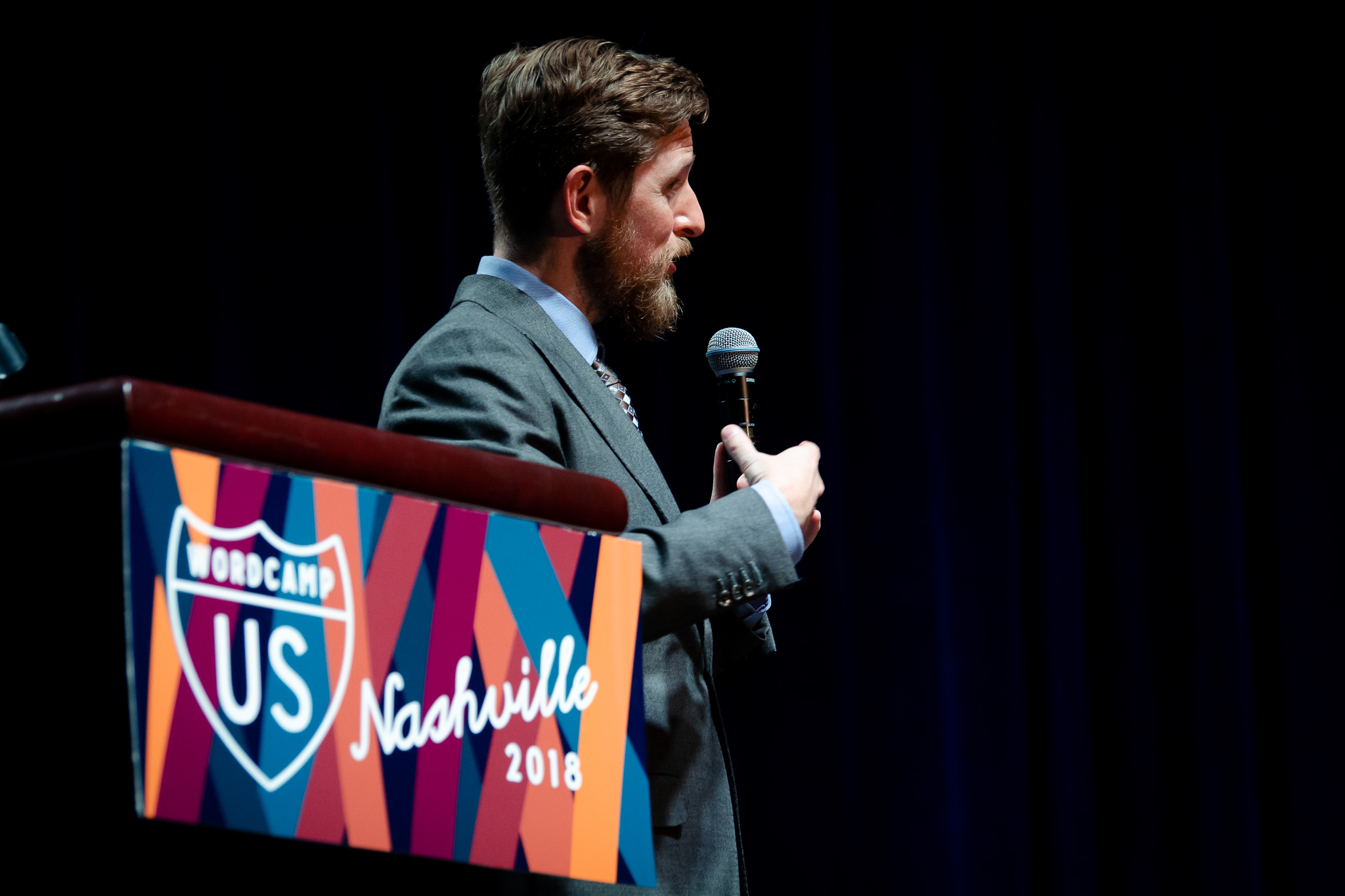
In his 2018 State Of The Word speech, project lead Matt Mullenweg told attendees at WordCamp US that the pace of change would remain high. Gutenberg, he explained, was only the start of a process to address some fundamental problems in the software’s overall user experience.
Here’s our selection of key highlights for VIP clients and the enterprise WordPress community.
WordPress is all-in on blocks
Blocks have been designed to be predictable and tactile. They can cope with the full range of functionality expected of any WordPress site: they can be simple, like a text block, or as rich as an entire e-commerce interface.
They reflect the reality of HTML structure, making it (finally!) possible to meet user expectations on things like copy-and-paste from applications like word processors. But as developers we’re able to simplify their presentation, make their function readily apparent to users, and make them reusable across the interface.
Already we’ve seen an explosion of creativity within the community. Creators of well-established plugins have made early efforts to adapt their interfaces to exploit the potential of blocks: Matt specifically highlighted the popular Yoast SEO and AMP plugins, which provide feedback on a block-by-block basis. And new plugins are being created, bringing structured content into the editor area without the clumsy use of shortcodes.
We’re also seeing the growth of libraries, toolkits and tutorials, making it easier than ever for developers to surface complex functionality or embed external services within the authoring experience. It won’t take long for users to expect to find a block for every purpose.
Blocks will break out of the text box
Matt confirmed that the next challenge for Gutenberg is to take the same block concept beyond post content. He showed examples of how blocks might replace what we currently know as ‘widgets’ and ‘menus’. Configuration would take place within the WordPress admin area, in the Customizer – or perhaps even inline, on the front end.
Development of phase two will take place, as before, in plugin form – giving developers plenty of visibility into the process, and plenty of time for experimentation and testing.
Key enterprise functionality ahead
Matt also shared his thinking for the third and fourth phases of the Gutenberg initiative, both with particular appeal to large scale professional content publishers.
Phase three is set to focus on collaboration and workflows. It is likely to include content locking based on blocks, rather than pages as now. This will be especially valuable to newsrooms working on breaking stories: we know many of our clients already have elaborate workarounds to allow journalists to work on different parts of the same article simultaneously.
Matt admitted: “One of the reasons that copy-and-paste from Google Docs to Gutenberg is so good, is that when I’m writing a post that I’m going to collaborate on, Google Docs is better for that. But if we can integrate these workflows directly into WordPress, we can integrate them with user systems, we can integrate them with revisions, and we can allow them to be fully extensible in a way that a SaaS service will never, ever be.”
Phase four will finally bring an official way for WordPress to support multilingual publishing. Numerous proven approaches already exist, of course. But the lack of a canonical solution within WordPress core is often cited as a weakness, and existing solutions often cannot guarantee to be compatible with other plugins and services.
Both these phases, proposed for 2020 and beyond, are likely to have implications for existing solutions, including plugins created and recommended by VIP. We’re excited to contribute our experience in these areas to the core initiatives, and encourage all of our clients to get involved as well. Feedback and participation from VIP clients provided the core team with critical insights during phase one, and those insights become even more pertinent as the team takes on the next areas of focus.
Enterprise takeaways in brief
The next phases of the Gutenberg project will continue to take place in plugin form. This will allow enterprise teams to test and adopt new functionality gradually as it comes out, and evaluate it in the context of existing workflows and customizations.
Phase two will focus on admin elements outside of pages and posts, further simplifying and streamlining the experience for users.
Phase three will focus on collaboration and workflows, which will be particularly useful for busy newsrooms as well as brand and product teams.
The fourth phase will take on multilingual publishing, bringing a canonical solution into core.
There are lots of ways for you to participate in the project! Whether directly through the many points of entry outlined on Make.WordPress.org, by sharing a private demonstration and feedback session with us at your offices, or simply by testing and working with the new features as they are developed, you can play a critical role in the project’s success.
Photos courtesy of: Brian Peat, Jen Hooks, Val Vesa. Thank you!
Automattic is putting together our first ever Design Awards, and we want you to be a part of it.
Earlier this year, in his talk at WordCamp Europe, John Maeda announced plans for an Automattic Design Award, to highlight and encourage examples of great design work in the WordPress ecosystem.
With WordCamp US fast approaching, we are now inviting entries at automatticdesignaward.blog. Submissions need to be in by November 16, with the announcement of the winners on December 3.
There will be nine awards in total, with three trophies presented in each of three categories – Best Site, Best Solution and Best Style.
We aren’t just looking for your prettiest pieces of work. At WordCamp Europe, John talked about the need for ‘deep design’ – rather than just sprayed-on design, added as an afterthought. Too often we focus simply on shipping; and whilst that may have been acceptable in the past, today’s users know they can and should expect more.
So we’re looking for work which demonstrates thorough processes of discovery, consideration, delivery, and listening to users’ responses.
There are two core eligibility requirements. Submissions must be ready for the arrival of Gutenberg, the new WordPress editor; and they must demonstrate accessibility as a ‘need to have’, not just a ‘nice to have’.
At VIP we’re fortunate to work with some of the most ambitious design and development teams in the WordPress space. We see many examples of smart, sophisticated design in the projects we support; and we’ll be encouraging our clients to put themselves forward. But we’re particularly excited to see what’s happening elsewhere in the ecosystem, especially behind the scenes.
Full details of the awards, the assessment criteria, the judging panel and the beautiful trophies can be found at automatticdesignaward.blog.
August kicked off with the second annual WordCamp for Publishers in Chicago, IL, where presentations and discussions centered on how publishers can protect and nurture the open web and all of its core values.
Meanwhile, as awareness efforts kicked up a notch, the new WordPress editor Gutenberg plugin surpassed 100,000 active installs within a week (and is now past 300,000). It’s now a central component of many new enterprise site projects slated for Q4 launch.
A fitting signoff as WordCamp for Publishers 2018 drew to a close with a day at the ballpark
Gutenberg News and Notes
The latest tools, demos, and updates around the block-based editor coming to WordPress 5.0.
After several releases in August bringing issue fixes and user experience enhancements including the new “Spotlight Mode” and Unified Toolbar design, the Gutenberg plugin is now at version 3.7.
Currently at 300,000+ active installs, the plugin crossed the 100,000+ threshold just a week after the “Try Gutenberg” prompt appeared in the WordPress dashboard.
Automattician and core contributor Gary Pendergast offered big picture thoughts on the long range vision and benefits of the Gutenberg project.
News and Releases
Updates from around VIP, our clients, and our agency and technical partners.
Catch up with notes and highlights from the second annual WordCamp for Publishers with co-organizer and Automattician Alexis Kulash’s comprehensive recap.
Get to know new VIP technical partner Setka and their print design-inspired, Gutenberg ready, content creation tools.
The Brightcove Video Connect plugin version 1.5 is now available, bringing multiple enhancements and bug fixes.
Matthew Ingram at Columbia Journalism Reviewinterviewed VIP client Civil‘s founder Matthew Iles ahead of the CVL token sale coming up on September 18th.
Congratulations to the 10up team for the successful launch of nobelprize.org. Learn more about their origins and work in VIP’s latest partner profile. And check out the public release of Distributor, which uses the REST API to make it easy to reuse content across sites.
Austin Smith, CEO of Alley, authored an extended report and recommendations around the future of local news for Lenfest, also excerpted in a piece for Nieman Lab.
Reaktiv Studios wrote an ode to Bootstrap, their favorite CSS.
Congratulations to rtCamp for their contributions to WP-CLI v2!
We’ve soft launched a VIP Dashboard for our VIP Go platform at https://dashboard.wpvip.com/. Please open a ticket to let us know what you think. We’re planning the first major feature, which will be data sync.
This month we profiled VIP agency partner 10up, whose work includes enterprise WordPress tools including Distributor and Ads.txt Manager. They have also contributed greatly to efforts around the new WordPress editor. 10up comprises more than 150 full-time staff members globally, and works with a wide array of clients including Facebook, Microsoft, Google, the State of California, ESPN, and AARP. Read the full profile to find out about 10up’s agency history, vision for the future, and why they chose the three words “Dedicated,” “Creative,” and “Welcoming” to describe their culture.
Media and Marketing Notes
Research and perspectives on the business of media and the practice of marketing.
“Unless we build in natural alternatives to ad revenue models we can’t be an honest authentic media brand.”
Frederik Anderson in Digiday explains Vice’s strategy to grow its revenue streams through ‘offline activations’ like music festivals and food courts.
“Even as they draw from journalism standards and training, podcasters seem to embrace the idea that their tone, style and motivations go beyond traditional techniques, defining their craft in non-journalistic terms such as intimacy and connection.”
Janet Saidi of the LA Times on how podcasts are changing journalism.
“The best parts of Chicagoist, the ones that Chance would be wise to preserve, were its broad editorial freedom and its focus on niche neighborhood stories that might escape the attention of larger outlets.”
Kim Bellware speculates on the implications of Chance the Rapper’s purchase of local news site Chicagoist.
Upcoming Events
#ONA18, the Online News Association‘s annual conference is just a few days away! Sept. 13-15 in Austin, Texas. Find us at the Midway when you get there. VIP is proud to support ONA as both a sponsor and the platform for ONA’s sites. You’ll find us in several spots on the schedule, including Steph Yiu’s Table Talk and a session with New York Times’ senior editor Hamilton Boardman called, “OMGWTFBBQ: Breaking News Without Breaking Your Site.”
The latest BigWP London is also just around the corner, September 13th at News UK headquarters in London at 6:30 pm. The four flashtalks are as follows: WordPress Multisite for large and high traffic multilingual websites by Giuseppe Mazzapica of Inpsyde; Rebuilding NobelPrize.org by Gabe Karp of 10up; How we won the World Cup by Joel Davis, News UK; and Using Gutenberg in production, by Jason Agnew, Big Bite. Space is limited and signups will close 24 hours before the event.
Look out, too, for a surprising amount of WordPress-related content at Drupal Europe! Automattic will again be sponsoring the event’s Open Web Lounge, to promote sharing and networking between open source projects, communities and influencers; and there are several familiar names from the WordPress world on the session program.
The second annual WordCamp for Publishers went down last week in Chicago with the theme “Taking Back The Open Web.” This theme was sparked from questions explored in a 2016 post by Drupal founder Dries Buytaert:
Do we want the experiences of the next billion web users to be defined by open values of transparency and choice, or by the siloed and opaque convenience of the walled-garden giants dominating today?
As conference organizers, we challenged speakers to touch on whether an open web ever truly existed, what state it’s in now, the consequences of a closed web, and how publishers can protect and encourage an open web.
Overall, we saw common themes emerge around empowering publishers to innovate and evolve. There was a shared belief that ethical journalism depends on an open web, with inclusivity as a fundamental building block to creating responsibly for the future.
Each of these topics has raised significant discussion in the WordPress community, and we envisioned #WCPub as a platform to discuss the state of the publishing industry and future of WordPress in the open web together, with folks from all different backgrounds in the industry. Thankfully, our speakers and attendees were more than up to the task!
Those who weren’t able to attend in person could live stream the entire event.
Where Code Meets Community
John Eckman, CEO of 10up, was particularly drawn to the challenge of the event’s theme as it related to identity, inclusivity, and imagined communities. John explored the philosophical roots of the open source movement and how those ideas influenced modern-day open source ethics, software freedom, and netizen empowerment.
“Accessibility should be a pervasive feature and not shoved in. We have allowed ourselves to walk away from it. Inclusivity should be a core principle.” @jeckman#wcpub
Austin Smith, CEO and co-founder of Alley, presented his research on the narrow path for local news. He argued in order to protect hyperlocal journalism, we’ll need to convince more readers to pay for the content they consume. We’ll also need to empower local publishers to innovate formats, ownership, and distribution.
Tyson Bird, projects designer at GateHouse Media, and David Parsons, senior software engineer at USA Today, spoke about their use of WordPress at scale to enable publishers to manage large media networks with a variety of markets and staff.
An Emphasis on Engagement
Caroline Porter, consultant for the Shorenstein Center on Media, Harry Backlund, co-founder and director of operations at City Bureau, and Sarah Schmalbach, resident at the Lenfest Institute, discussed the ethical collection of user data, experimenting with innovation around reader engagement, and two-way audience communication in a panel session moderated by Sherry Salko, director of the Amplify News Project.
Eric Ulken, a consultant, and Nick Johnson, founder of Pigeon Paywall, shared differing viewpoints on monetization strategies that ultimately focused on catering to users and their needs.
There was a lot of excitement around Gutenberg, and Chris Van Patten, founder of Tomodomo, open sourced his team’s documentation project on best design practices using Gutenberg live during his presentation.
Chris wasn’t the only presenter to live open source a project during a talk. Russell Heimlich, lead developer at Spirited Media, open sourced his team’s image CDN project to much applause.
The Trust Project also announced their Trust Indicators plugin during the event.
Sina Bahram, president of Prime Access Consulting, and Pattie Reaves, senior user experience developer at Alley, discussed the importance of developing with accessibility in mind.
Two lightning talks also addressed site accessibility concerns: one focusing on the particular needs of those with dyslexia, and another which offered a solution to accessibility through integration with Alexa.
Jim Birch, senior Drupal engineer at Kanopi Studios, walked us through the value of correctly implementing metadata for content and showed off the tools for doing so.
Shayda Torabi, director of marketing at WebDevStudios, and Jodie Riccelli, director of client strategy at WebDevStudios, demoed a number of workflows with streamlined editorial experiences all contained entirely within WordPress.
Brands big and small are using WordPress. But when we look at the editing workflow, we're all piecing together stacks of frankentools before content gets into WordPress. Premise: Can we centralize everything in WordPress instead? #wcpub
Keanan Koppenhaver, CTO at Alpha Particle, showcased a few modern use cases of the REST API, from the Techcrunch redesign, a mobile news simulator, Amazon Echo integration, virtual reality, and more.
AMPlifying Performance
Barb Palser, global product partnerships at Google, argued we should look at site performance as a product, with a focus on quantifying the opportunity to increase user engagement.
Leo Postovoit and Ryan Kienstra of XWPwent a step further and demonstrated how to improve performance “up to 85%” simply by integrating AMP.
On the flip side, Brian Boyer, VP of product and people at Spirited Media, delivered a passionate talk explaining his team’s decision to leave the AMP platform to focus on engaging readers in a different manner.
The always-quotable @brianboyer on user experience: "We want people to love us, and nobody's going to love us when we're punching them in the face." #wcpub
Attendees voted on Unconference session proposals to explore hyperspecific themes. The winning topics (“Gutenberg Therapy Session,” “Direct Revenue Discussion,” and “The Future of WordCamp for Publishers”) served as an opportunity for many to share their concerns about specific industry trends.
Workshops dealt with a variety of topics important to the community:
Joshua Wold, design strategist at XWP, dove into creative thinking through development problems by sketching.
Ernie Hsiung, CTO at WhereBy.Us, fostered a discussion about communication across stakeholder groups.
We held a series of lightning talks that ranged widely in topic: from determining whether WordPress was a product or community, to implementing transparency standards for news; from solving content reuse and syndication woes to finding smarter and more efficient ways to create responsive HTML emails and manage media at scale, and even a case study of the need to combine mobile and AMP themes.
A Look to the Future
Then — all too soon — it was over!
We wrapped up the event with a shout-out from NiemanLab naming us WordPress’s publishing summit and a trip to the ballfield to see the White Sox take on the Indians.
Many thanks to all the speakers, sponsors, organizers and volunteers who made this fantastic week possible. Hope to see everyone at next year’s WordCamp for Publishers!
The new WordPress editor Gutenberg hit a major milestone in July, completing its MVP feature goals and moving its focus to bug fixes and compatibility. VIP client Quartz shipped v.5 of their site, an incredible fifth full version in six years and this one faster than ever. We welcomed Slack’s SlackHq.com to the VIP family. And Automattic CEO Matt Mullenweg joined Kara Swisher on her Recode Decode podcast to talk about WordPress, the future of the open web, and lots more.
Read on for updates from all over, including an in-depth client spotlight with the founders of Civil, and a talk by Airbnb content lead Hayley Nelson on the content strategy principles behind major brand marketing campaigns. We’ve also added a platform updates section, where you can get a quick summary of all of the changes to our platform in the last month.
The latest tools, demos, and updates around the block-based editor coming to WordPress 5.0.
Gutenberg is officially considered ‘feature complete‘ as of version 3.2 released in early July! Two successive releases this month (July 20 and July 30) included a multitude of improvements, from strengthening the API surface to converting existing content to blocks.
We explored one of the more frequently asked questions about Gutenberg – plugin compatibility – and shared our findings and advice for evaluating your own plugins.
Gutenberg Times curated this list of 20 Gutenberg talks on WordPress.tv.
Inpsyde’s David Remer gave a talk on Gutenberg’s state management, introducing the Slot/Fill concept
Every other week, Zac Gordon and Joe Casabona get together and talk about the latest developments in Gutenberg and WordPress 5.0.
News and Releases
Updates from around VIP, our clients, and our agency and technical partners.
Congratulations to the entire Quartz team on their launch of the latest version of QZ.com, which we’re honored to host on VIP. Earlier this month, Elan Kiderman, senior product designer at Quartz, shared his approach to building ambitious editorial projects (Map of the Internet, anyone?).
The open source WordPress Coding Standards (WPCS) project released milestone version 1.0. This project has had 54 contributors in its 9 year span including 5 from VIP.
Kara Swisher interviewed Automattic CEO Matt Mullenweg on the Recode Decode podcast, covering current industry issues like data privacy and advertising, the future of the open web, and our approach to distributed work at Automattic.
Facebookannounced that starting in August, third-party tools like Publicize (the tool for WordPress.com and Jetpack-powered sites that connects your site to major social media platforms) will no longer share posts automatically to Facebook profiles. VIP clients can consult this Lobby post for details on navigating the change.
The Wikimedia Foundation announced a global collaboration to increase offline access to Wikipedia and the Wikimedia sites.
Adam Silverstein of 10up published a guest post on Google‘s Open Source Blog reflecting on his experiences as a contributor, and received a Google Open Source Peer Bonus for his work bringing MathML to AMP.
HumanMade helped UNISON tell a story of digital adoption inside a trade union. Libby Barker was interviewed at WordCamp Europe about how a decoupled WordPress admin can make enterprise sites more flexible and engaging.
Inpsyde launched a new composer package, Inpsyde Assets.
Efficiency was the name of the game at Reaktiv Studios this month. Nick Croft wrote about jumpstarting projects with WP CLI scaffolding and Chris Ford discussed her recipe mix of project management tools at the Dungeons & Dragons-themed WordCamp Orange County.
Earlier this year, Trew Knowledge and the Canadian Olympic Committee were named an official honoree in the 2018 Webby Awards for best Sports Team website.
July has been a busy month of enhancements, releases, and maintenance for our VIP Go platform. If you haven’t tried out our VIP CLI tool for our VIP Go platform yet, please give it a go. We also added support for using a continuous integration service to build Javascript, CSS, SVG, etc. If this floats your boat and would improve your workflow, we have some documentation for you.
Maintenance: Removed TLS v1.0 from our VIP Go platform on July 11 (Lobby post)
Media and Marketing Notes
Research and perspectives on the business of media and the practice of marketing.
There’s a strong parallel between what Disney has accomplished and what today’s brands are trying to do: Find the intersection of strong stories, customer emotions, and constantly evolving technology. For marketers, that can be a hint—not only at how to approach creative problem solving—but also how to explore new approaches to your hiring and staffing strategies.
Time and again tech reporting gets caught in the hype rather than reality; a super-fast but impractical rail alternative proposed by Elon Musk gets tons of coverage, but it’s difficult to get real rail projects funded … Maybe we should simply scrap the idea of a “tech desk” altogether.
James Ball makes the case for a new model of tech journalism.
Civilis a new WordPress-based platform using the blockchain to support, distribute and protect journalism, developed by partner Alley and launched recently on VIP. Civil’s first fleet of newsrooms launched earlier this summer and continues to grow. Read more about the project and its underpinnings in this extended spotlight interview. And watch for the CVL token launch, the token that allows a journalist to open a newsroom or a citizen to have a stake in challenges and votes, on September 18.
Upcoming Events
We’re starting to make packing lists for #ONA18, the Online News Association‘s annual conference, Sept. 13-15 in Austin, Texas. VIP is proud to support ONA as both a sponsor (look for our booth at the Midway!) and as a hosting and support provider for journalists.org and ONA’s other sites. Don’t miss our very own Steph Yiu serving up double the trouble at the event: she’ll be hosting a Table Talk and presenting alongside New York Times’ senior editor Hamilton Boardman in a session called, “OMGWTFBBQ: Breaking News Without Breaking Your Site.”
The next BigWP London meetup, our gathering of developers, product people, and editors who work on enterprise WordPress sites, is set for September 18 and will fill up fast. Reserve your place now. Here’s a YouTube playlist with talks from last December’s BigWP London event.
WordCamp for Publishersis right around the corner, August 8-10 in Chicago. The full tickets have closed, but you can still reserve your spot to attend without the guarantee of swag and evening social event attendance. It’s a fantastic event and we are proud to both sponsor and participate again this year. Hear directly from one of the organizers on what to expect.
Rumor has it Tracy Levesque will grace the stage at WordCamp Philly, which goes down October 27 and 28. Call for speakers closed this week, so keep a close eye as the first presentations get announced. In the meantime, you can enjoy Tracy’s talk, “Diversity Works” from this year’s VIP Workshop.
Major WordCamps are going down this month in Montréal, Moscow, Minneapolis, Mexico City, Omaha, and so many more. Check out the full schedule for your next chance to join the fun.
This guest post was contributed by Brad Campeau-Laurion (@potatomaster) of featured partner Alley, and also one of the organizers of WordCamp for Publishers. VIP is proud to sponsor and participate in this great event.
WordCamp for Publishers is a community-organized event bringing together folks who use WordPress to manage publications, big or small. Our goal is to empower participants by coaching them on best practices, and encourage collaboration in building open source tools for publishers. Anyone who actively manages a publication with WordPress will benefit from attending.
Our schedule is up now and includes speakers from national media organizations, smaller publications, and agencies that work with media companies. We’ll have a main track of talks and panels that are all about 45 minutes each with time for Q&A and a separate track of 90 minute in-depth workshops around topics that will give you actionable takeways to bring back to your publications. There will also be openings for our unconference sessions which you can self-organize at the event with your fellow attendees.
For people that prefer the hallway track, there will be opportunities to connect with people from many top media organizations. We’ll be working to organize formal mentorship sessions especially for those from smaller publications and underrepresented markets. You can also chat with our sponsors who come from top agencies and media technology companies.
Of course, you can also expect a lot of fun at WordCamp for Publishers. We’ve arranged events including an architectural boat tour of Chicago and a White Sox game. If you’re able to stick around all three days, there’s also a Contributor Day on Friday where you can learn how to contribute to WordPress or any of the numerous plugins and projects that support publishing on the platform.
Civil is a new platform using the blockchain to support, distribute and protect journalism. Last month, Civil launched its “First Fleet” on WordPress.com VIP. A group of what will ultimately be 13 Newsrooms focused on local, international, investigative and policy journalism that received grants from Civil to be the first to officially publish on its platform, Civil’s First Fleet share a common commitment to the ethical standards enshrined in the Civil Constitution and enforced through Civil’s blockchain technology. Civil itself has an ambitious and worthy mission: to “help power sustainable journalism throughout the world.”
Prior to launch, VIP’s Ryan Sholin caught up with two of Civil’s co-founders: Matt Coolidge, Brand Strategy and Communications lead, and Dan Kinsley, Engineering lead. Both were excited to discuss their work at Civil and what blockchain and crypto-economics can do for journalism.
Can you talk a little bit about the idea behind Civil and what it has been like to build out new models? It seems like you’re doing a lot of trailblazing right now.
Matt Coolidge: It’s interesting when we’re talking about “building new models.” I always think it’s a really helpful baseline to start any conversation like this by really making clear that Civil’s mission is journalism. There’s one very key thing that we don’t need to reinvent and that is what constitutes ethical journalism.
I think that the models that have proliferated in recent years have made it harder to incentivize quality journalism in a sustainable way. We’re introducing a new model that’s based on blockchain and crypto-economics that is incentivizing quality journalism and rewarding individuals for helping to curate a marketplace for high-quality journalism.
You mentioned incentivizing people to contribute and incentivizing people to participate. It seems there’s a whole democratic process built in.
Matt Coolidge: When we talk about incentives, I think there’s the obvious ideological incentive. Certainly, we want people that believe in quality journalism to identify us as a marketplace that shares their values, and certainly, support the independently owned and operated newsrooms that run on Civil.
Going a level beyond that and recognizing that human nature is not always pure or idealistic in its intent, we think that there’s a great opportunity to introduce very real economic incentives that also help this model proliferate. Part of that is, how can we introduce incentive structures that essentially outline an economic gain, which is, spot the unethical newsroom and keep it off the marketplace and if you do so successfully, you can be economically rewarded.
“How can we get people onto a new marketplace that offers what we think is a healthier and more pro-journalism incentive structure?” –Matt Coolidge
What is the day-to-day role of blockchain in the production and consumption of journalism at Civil?
Dan Kinsley: The key part of Civil’s protocol is a crypto-economic system called a Token Curated Registry, a whitelist of approved newsrooms. We have a token called the CVL Token, that is essentially used to provide financial incentives for people to curate this list.
If I’m a newsroom, I could apply to be on this registry. I want to be on this registry because it’s going to be a sign of credibility. When people come to my newsroom, they’ll trust that we’re following the rules of the Civil Constitution.
When you apply, all of the other token holders can then play this game where they say, “Will having them on the list increase the value of the list and increase my holdings?” Then as the value of the list gets better, it increases the demand of other newsrooms to be on that list, so then it becomes this virtuous cycle of, as there’s more demand to be on the list, the list gets higher and higher quality and more people want to play the game of curating the list.
Matt Coolidge: One parallel I’d draw is Airbnb (or you can just as easily plug in Uber, Amazon…pick a platform model). Airbnb we admire in particular for its ability to say, “Hey. You want to travel? There are two ways to travel. You can travel like a tourist and go to Expedia or whatever and stay at a Hilton or you can travel like a local and you can stay with an Airbnb host in a neighborhood of your choice.”
Certainly, Airbnb is not the only platform that is doing what they’re doing, but they’ve been so effective in creating this network effect. I think we have the same opportunity with a platform model with Civil to say, “Hey. Civil is ultimately a protocol and it has this definition of what does and does not constitute ethical journalism that is spelled out in a document known as the Civil Constitution.”
Do you think a statement of core values has been missing from the corporate media world?
Matt Coolidge: I don’t think we’re looking to vilify say, “the corporate media world,” but there is certainly an issue of trust and questioning bias and what is information and what is misinformation and where is this really coming from? When you look at the mass consolidation right now, something like 85% to 90% of mainstream outlets is owned by five corporations here in the US.
That does not engender trust and it questions who is the holding company and what shareholders are they beholden to? [Civil creates] a decentralized network where ownership of this network is represented by owning these Civil tokens. Come here and launch a platform knowing that you’re beholden to your readers alone.
How will you know what success looks like? What is going to make Civil sustainable in the long run?
Dan Kinsley: A sign of success is having diverse opinions: having conservative newsrooms, liberal newsrooms, newsrooms in Asia, newsrooms in South America. Having everybody with a voice being empowered to tell their stories. Providing tools for these publications to establish credibility and trust with their constituents.
Matt Coolidge: Attracting additional readers and compelling them to support Newsrooms is the most important metric. We’re committed to always placing the reader <> journalist relationship at the center of Civil, and never standing between the two. Along those lines, we’ll never take a direct cut ourselves from a subscription fee that a reader pays a Newsroom. We don’t want to have a stake in that process and risk compromising that relationship by ever seeking to influence the behavior of one party or another.
Developers will also play a significant role in Civil’s growth. With this crypto-economic structure, there is a very novel and interesting opportunity for open source developers to come in and to really be fairly compensated for their work in a way that doesn’t necessarily thrive outside of these crypto-economic structures. This is hopefully going to be a compelling draw for some really talented developers to come and help build the apps, the tools, the services that we think readers will very quickly demand and that will definitely outpace our own capacity to do so.
“We want to find the best of breed providers in each part of this value chain, give them a big hug, and say, ‘Hey. Do you guys want to start a newsroom?'” – Dan Kinsley
How did you approach the selection process for Civil’s First Fleet?
Matt Coolidge: We wanted to focus on areas that we saw as hardest hit by 20 plus years of mass media consolidation. We decided to focus broadly on local, international, policy, and investigative journalism because we think that there’s a huge demand right now that far exceeds the supply of quality journalism serving those markets. Each of the 13 newsrooms we have right now are a nod to those four beats.
Now, certainly the Civil marketplace is not going to be confined to those, but those are areas that readers are very passionate about and already very inclined to support. Introducing this subscription economy predicated on reader support, I think is going to help newsrooms get to sustainability very quickly, especially when they’re run by folks like Nushin Rashidian from the Tow Center or Seamus Toomey who used to be the managing editor at DNAInfo who really understand not only the editorial but the publishing side and can really help set important precedents around best practices.
What about WordPress made it such a good fit for the First Fleet newsrooms to get started?
Dan Kinsley: Everything we do, we want to do open source. Like I said, we’re a protocol and we found WordPress just aligns very tightly with our values. It’s a great solution because it just works, right? We actually started to go down a path of building our own CMS and we upended it and we said, “Well – why – when we can have way more reach with WordPress?” They have an extensive plugin system so we can build plugins there. Once we went down that path, it seemed like a no-brainer.
Is the plan to open source everything?
Dan Kinsley: The core protocol, and everything you need to build anything that we would ever build, will be open source. Some people call that model “Open Core.” In the future, we envision building what you could call a Civil version of the Twitter Firehose, so there’s all this activity that happens on the blockchain. You have all these little islands. Each newsroom is publishing to the blockchain and there is all this activity.
Then we’ll have a service that listens to all that and then builds an API. You could then subscribe to that Firehose and build either your own client or your own curation service. Maybe it’s built for screen readers or it’s focused on certain industries or whatever. Stuff we haven’t even imagined yet. I imagine you could build your own Firehose, but we’ll probably have a proprietary version that we’ll have. Other than that, everything will be open source.
“To “experience Civil” can be as simple as coming and reading and supporting an outlet in any payment method that you choose.” –Matt Coolidge
What qualities are you looking for as Civil builds partnerships, and how did you land on VIP as part of that process?
Dan Kinsley: What I liked about WordPress.com VIP is they get our model and the value we want to bring to the industry. We want to empower newsrooms. We want to lower the barrier to entry. I think that’s actually in your mission statement. Like, democratize publishing. That’s what we want to do, right? We want to find the best of breed providers in each part of this value chain, give them a big hug, and say, “Hey. Do you guys want to start a newsroom? Go talk to WordPress.com VIP if you need hosting. Go talk to our friends over here at Pico if you need payment. Go talk to our friends at Alley if you need site development.” Again, just really lower the barrier to entry.
Matt Coolidge: We want to upend a system where you have this duopoly between Facebook and Google where they’re controlling something like 70% of digital ad revenue. It’s choking publishers off. It’s not giving them many options.
How can we get people off and onto a new marketplace that offers what we think is a healthier and more pro-journalism incentive structure? I think part of the way we do that is to breed familiarity and to really reward and promote beloved tools and approaches that journalists and publishers are already using to great success.
As the First Fleet launches, what should people know? What’s the next step for them after they read a story?
Matt Coolidge: One of the most important things that we can’t stress enough about Civil right now is that we have this novel economic game-based approach that is running on this token economy.
The vast majority of people at least initially that are coming to Civil to read and support journalism are probably not going to touch that system. They are more than welcome to, and we want to be very transparent and encourage as many people as possible to do so, but at the end of the day, Civil is a publishing platform on which this great new crop of journalistic outlets are going to launch and to “experience Civil” can be as simple as coming and reading and supporting an outlet in any payment method that you choose.
If you do want to go below what we call the ‘water line‘ and play this economic game and help to really promote a high-quality marketplace for journalism, you can absolutely do so.
Dan Kinsley: This First Fleet is just that. The first ones; they’re the vanguard. There’s such a pent-up demand for independent publications. I would encourage people to don’t think that they can’t. If they have an idea, then there’s probably something there. We can provide the tools and don’t sell yourself short. I know that sounds corny, but there are lots of publications that I think could be created on this model.
Check out Civil’s First Fleet:
Documented NY covers New York City’s immigrants and the policies that shape their lives
Sludge focuses on the nontraditional, often shadowy ways that special interest groups advance agendas
ZigZag is a podcast about capitalism, journalism, and changing the course of women’s lives
There are lots of summer launches across the VIP family to celebrate, including Rolling Stone, Civil‘s First Fleet, and top Venezuelan news site La Patilla. A bigger, better, and bolder WordCamp Europe brought news of the next steps and roadmap for the Gutenberg project. And we released the first building block in our focus on empowering developers on VIP, the VIP CLI.
Read on for June highlights from across the enterprise WordPress community, including a look ahead at must-attend summer and fall events including ONA and WordCamp for Publishers.
June brought one of our favorite events of the year, SRCCON 2018
Gutenberg News and Notes The latest tools, demos, and updates around the block-based editor coming to WordPress 5.0.
There are now 14,000 sites actively using Gutenberg. That’s according to WordPress.com co-founder and Automattic CEO Matt Mullenweg, who shared the Gutenberg Roadmap as part of his keynote at WordCamp Europe. Watch the main keynote and Q&A, or read a summary and transcription.
As of June 21st, the Gutenberg plugin is at version 3.1, and includes a tips system for new users, improvements to the block sibling inserter, and much more as detailed in Matias’ latest What’s New post.
The public version of our Gutenberg Ramp plugin is now available (Lobby post for VIP clients). We created this version for anyone in the community with sites hosted elsewhere who want to take advantage of the same functionality we created for our users on the VIP platform (Lobby post about using Ramp on VIP Go). The plugin allows users to turn Gutenberg on for certain post IDs, page IDs or content text, making it easier to test and activate Gutenberg at your own pace, instead of flipping the switch site-wide in one go. We have lots of additional resources as well, including how-to videos and TestGutenberg.com where you can experiment with the latest version.
10up published the results of a Gutenberg usability test, including heatmaps and verbatims from participants.
News and Releases Updates from around VIP, our clients, and our agency and technical partners.
Earlier this month we released VIP CLI, a new and direct way for developers to interact with their applications hosted on the VIP Go platform. (Lobby post, announcement post)
The new automated build and deploy workflow for VIP Go means you no longer have to manually build, commit, and push your code (Lobby post).
We profiled agency partner Big Bite Creative in our latest Six Questions With…. Read all about their origin story, their values, and the impressive work they’re doing in enterprise application development using Gutenberg and React Native.
SketchPress is 10up’s new library of WordPress admin interfaces, symbols, and icons aimed at saving designer’s time when wireframing. 10up also created Simple Podcasting, an intuitive and lightweight plugin that includes beta support for Gutenberg. Check out what went down at their annual summit in this video.
Alley joined the American Alliance of Museums (AAM) annual meeting to present their work with Freer|Sackler including TMS Connect, which allows museums to synchronize their collections and objects into WordPress, and an Alexa Skill that works with their VoiceWP plugin.
Big Bite Creative redeveloped PMC’s recent acquisition Sourcing Journal, integrating Vamp footwear and Rivet denim as well.
Siobhan McKeown of Human Made spoke on the Yonder podcast about hiring remote workers.
Inpsyde implemented an encryption feature in their plugin BackWPup Pro to make backups GDPR Compliant.
Reaktiv Studios wrote a prediction for the future of Gutenberg (tl;dr the ‘Gutenlook’ takes over the world).
rtCamp launched leading Venezuelan news site lapatilla.com on VIP this month, as well as helping LaterPay complete their VIP technical integration.
XWPlaunched AMP Plugin Release v1.0-alpha1, which includes “support for core themes, a big update to the compatibility tool and extended Gutenberg support! 🎉”
The Big Bite Creative team in their natural habitat. Read more on Big Bite in our partner profile.
Media and Marketing Notes Research and perspectives on the business of media and the practice of marketing.
It’s hard to be transported to another world when you can still smell the salmon you had for dinner earlier that night.
#NABJ18, hosted by the National Association of Black Journalists, goes down Aug. 1-5 in Detroit. This year’s theme is “Driving Journalism, Technology & Trust.” Drawing over 3,000 journalists, media executives, PR professionals, and students, this annual convention is part conference, part job fair and features special events with Tyler Perry, KEM, Tamar Braxton, and more.
Tickets are still available for the second annual WordCamp for Publishers, Aug. 8-10 in Chicago. This is a community-run event with organizers volunteering from Alley, Mother Jones, PMC, Dow Jones, iOne Digital, Hand Built, and here at VIP. The sessions listing is now available on the site and there are topics of interest to engineering, product, and editorial teams, with speakers from national media organizations, niche publications, and agencies. Last year’s event produced incredibly useful talks and materials, and this year’s is sure to offer the same.
“Press on: Moving Forward Together” is the theme for this year’s Asian American Journalist Association conference, slated for Aug. 8-11 in Houston. #AAJA18 offers workshops with major cable news outlets; a screening of Crazy Rich Asians, and the second annual Story Slam. See the full schedule here.











 WordPress VIP Lobby
You must be logged in to post a comment.